Next-Generation Communications Systems
Advanced Mission Connectivity Hub
Built for Contested Operations
Intelligent communications that adapt, optimize, and reroute traffic across MANET, SATCOM, 5G, Wi-Fi, and other available transport paths in real time.
The Challenge
Mission networks must maintain operational continuity across land, sea, air, and distributed operations, even under degraded, congested, and electronically contested conditions.
Powered by adaptive RF control, beamforming, and real-time RF intelligence, Maxtena platforms continuously optimize spectrum use, link quality, antenna behavior, gateway roles, and transport paths when conventional architectures become vulnerable.
Engineered for Adaptive RF Dominance
Intelligent RF systems that sense, adapt, and optimize in real time.

Adaptive RF Front End
Manages RF behavior, antenna resources, and link conditions to sustain performance across mobility, interference, and changing mission demands.

Adaptive Beamforming
Electronically steers and optimizes RF energy in real time to maintain stable links across mobile and distributed platforms.

RF Intelligence Layer
Analyzes spectrum, link health, interference, mobility, and topology to support routing, gateway selection, and transport optimization.

Multi-Orbit BLOS Connectivity
Extends beyond-line-of-sight reach across GEO and LEO services, including pLEO, for resilient mission communications.

Adaptive Multi-Transport
Routes traffic across MANET, SATCOM, 5G, and Wi-Fi paths to support mission continuity.

Secure Communications Architecture
Built around policy-based control and cyber-resilient design principles for contested environments.
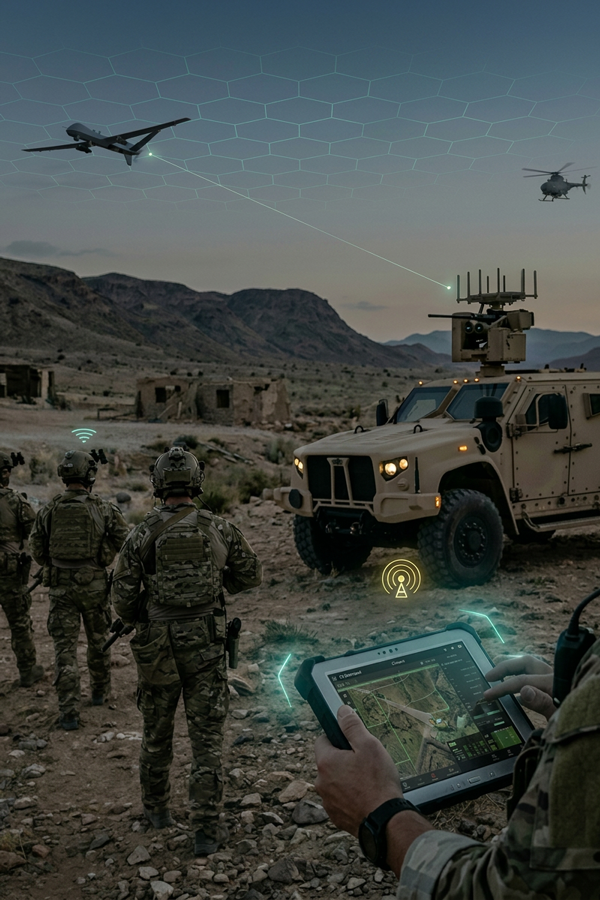
Built for Multi-Domain Operations
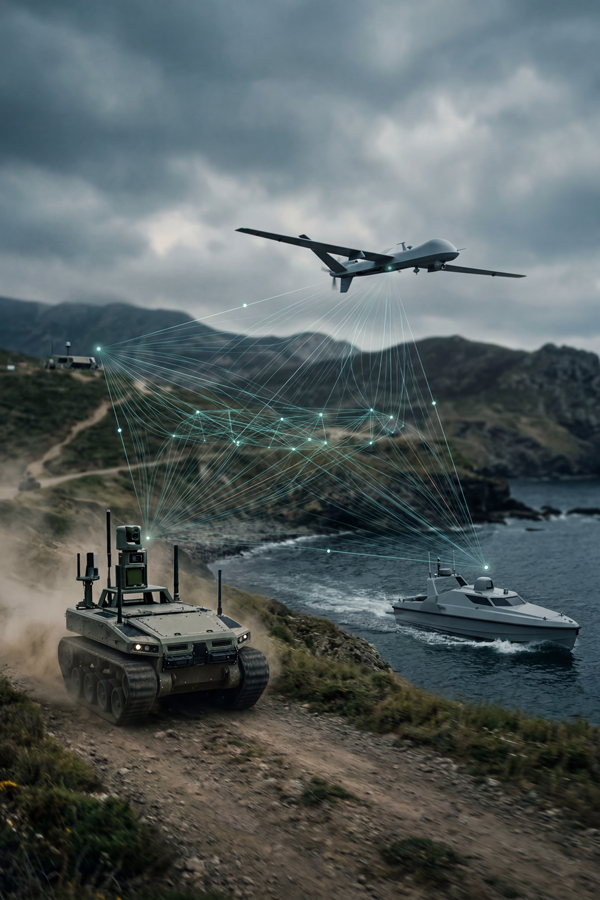


What Sets Maxtena HYDRA Apart
Five reasons HYDRA stands apart: native multi-transport connectivity, software-defined routing, open expansion, reduced complexity, and mission-ready deployment.
Native Multi-Transport Connectivity
HYDRA brings multiple mission-ready communication paths into one integrated platform for resilient connectivity in dynamic environments.
Software-Defined Networking With Auto-PACE
HYDRA manages Primary, Alternate, Contingency, and Emergency (PACE) routing through bandwidth virtualization and policy-based link selection.
Open, Expandable, and Interoperable
HYDRA uses open interfaces to integrate with evolving tactical ecosystems and support future expansion.
Less Complexity. Lower SWaP. Faster Fielding.
HYDRA consolidates functions that often require separate hardware, reducing cabling, interfaces, potential failure points, and operator workload.
Mission-Ready Today. Future-Ready Tomorrow.
Compact, rugged, and adaptable for tactical vehicles, autonomous systems, airborne platforms, and dismounted operations.
HYDRA-X
Adaptive Communications in a Mission-Ready Form Factor
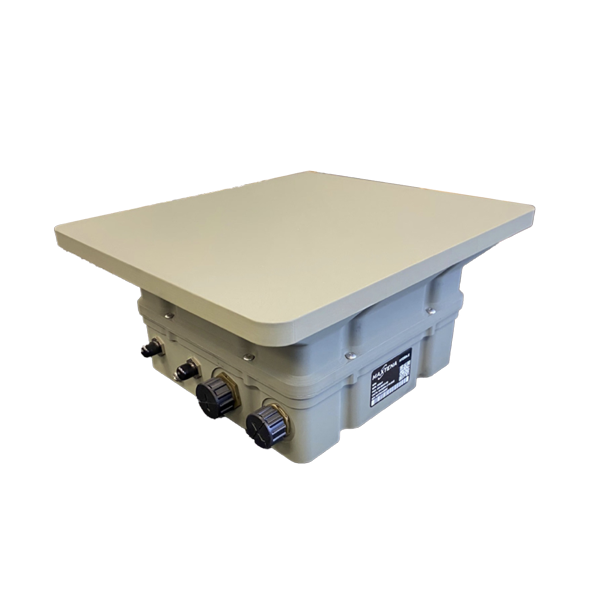
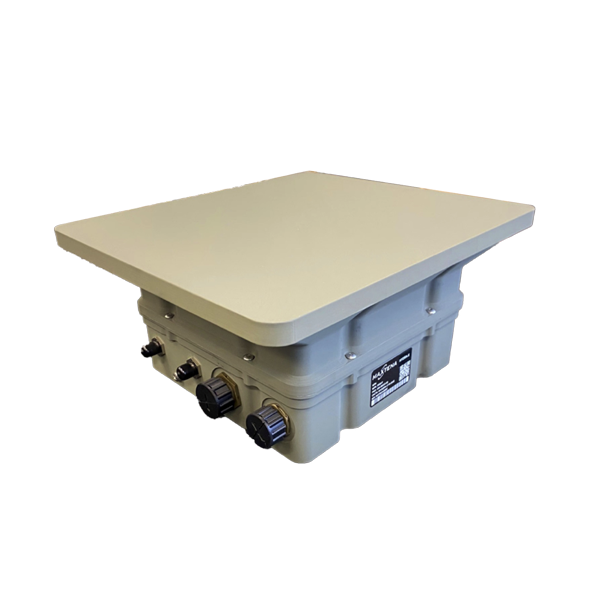
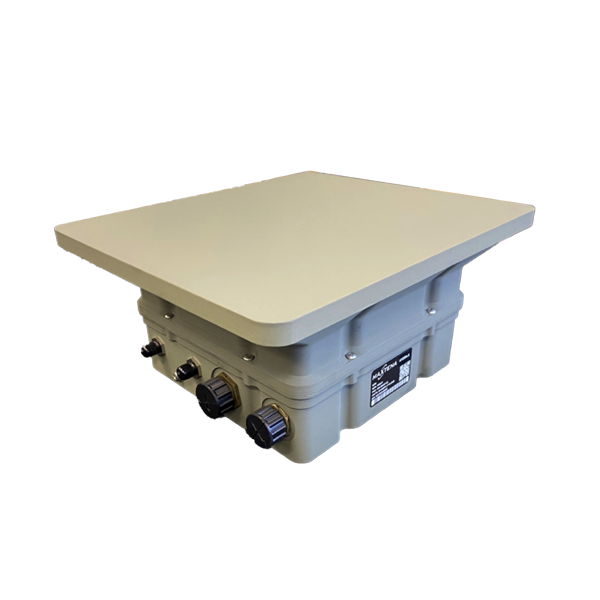
HYDRA-X brings Maxtena’s adaptive RF architecture into a compact, ruggedized communications node that unifies tactical MANET, pLEO/SATCOM backhaul, 5G and Wi-Fi access, RF transport, and edge computing. During mobile operations, HYDRA adapts paths, gateway roles, and transport resources to support mission connectivity.
Explore HYDRA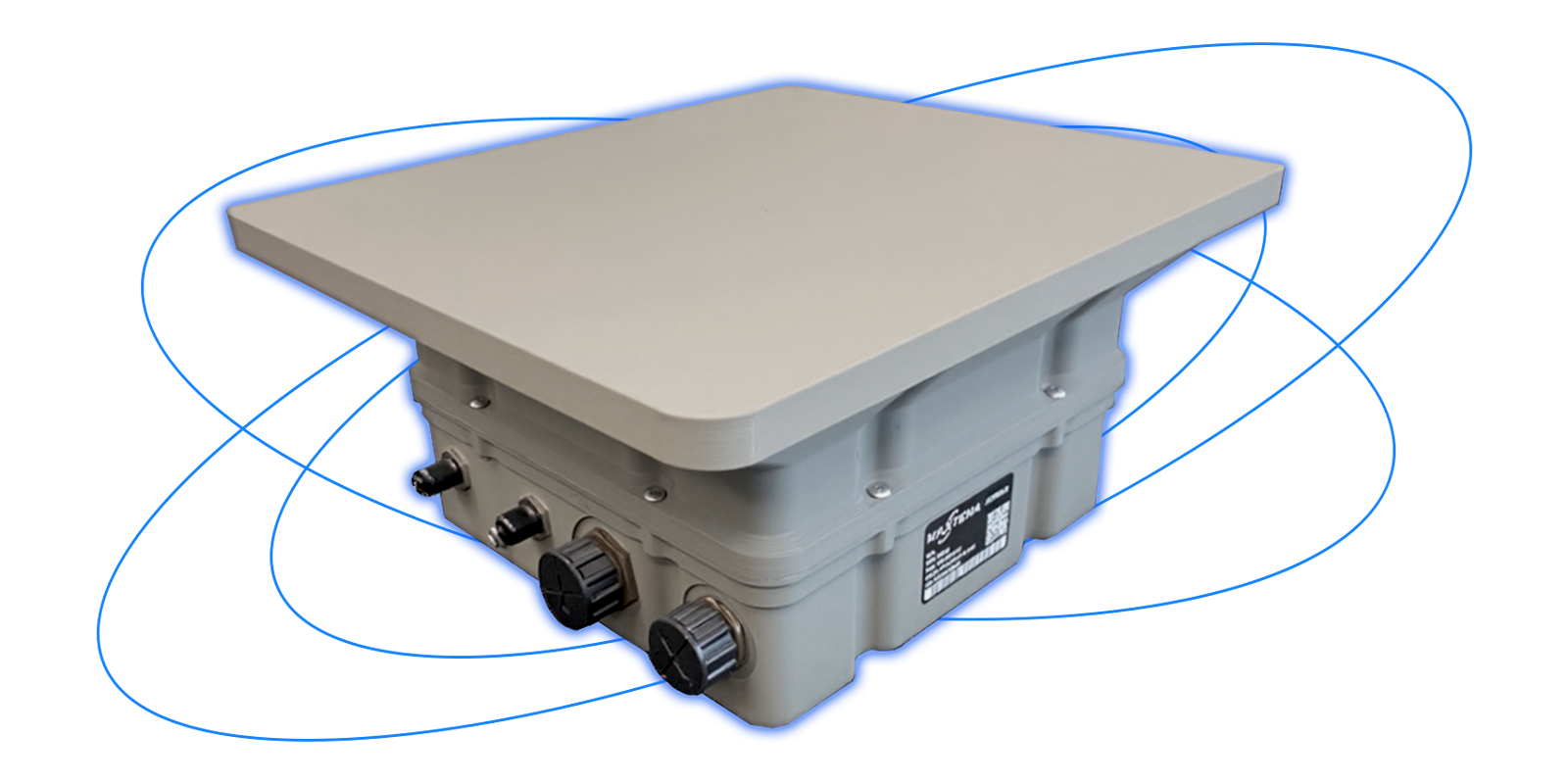
Unified Multi-Transport Node
Combines MANET, pLEO/SATCOM, 5G, Wi-Fi, RF transport, and edge computing in one ruggedized architecture.Dynamic Gateway Selection
Automatically selects the best available node or path for BLOS backhaul, reducing manual configuration and operator burden.Mission-Matched Modularity
Supports baseline, pLEO-enabled, 5G-enabled, and full-spectrum configurations while preserving a common architecture.Competitive Landscape & Positioning
HYDRA brings high-throughput LPI/LPD MANET, pLEO SATCOM, an organic 5G small cell, and Qualcomm-powered edge computing into a single ruggedized node. No current market offering combines all four capabilities in one integrated form factor built for PAE C2/CC2 requirements.
01
Legacy BFT 2 Vendors
Designed primarily for single-domain tracking. No MANET, no pLEO, and no 5G. Architecturally incompatible with NGC2 requirements.02
Single-Domain MANET Radios
Strong waveform performance, but no SATCOM integration, no 5G capability, and no edge computing platform.03
Separate SATCOM Terminals
External Starlink or pLEO terminals add operator burden, SWaP burden, and RF signature. No integrated MANET or 5G path.04
HYDRA Advantage
Multi-domain connectivity integrating MANET, pLEO, 5G, and edge computing.HYDRA Mission Configurations
Mission-matched configurations help program teams align capabilities with operational requirements and budgets while maintaining a common architecture that can simplify training, logistics, and sustainment.

HYDRA Baseline
Core Node
The foundation for a complete tactical communications architecture.
HYDRA-P
pLEO BLOS Connectivity
pLEO-enabled configuration for resilient beyond-line-of-sight connectivity.
HYDRA-S
Private 5G
5G-enabled configuration providing an integrated private 5G network extension for tactical formations.
HYDRA-X
Full-Spectrum Connectivity
The most capable configuration, combining tactical mesh, pLEO/SATCOM, 5G, Wi-Fi, RF transport, and edge computing in one node.
Dynamic pLEO Gateway Selection and Pooling
Provision the Fleet. Activate Based on Mission Need.
HYDRA supports policy-driven BLOS activation, gateway nomination, and backhaul selection so the network can route through the best available node instead of relying on fixed terminal-by-terminal operations.
The Operational Challenge

Cost Inefficiency
Idle service costs increase when every fielded terminal requires dedicated, always-on provisioning.
Cognitive Burden
Soldiers manually configure gateways, increasing risk of error during high-tempo operations.
Bandwidth Constraints
Legacy terminals and fixed gateway models can limit throughput for modern mission command and distributed operations.The Maxtena Solution
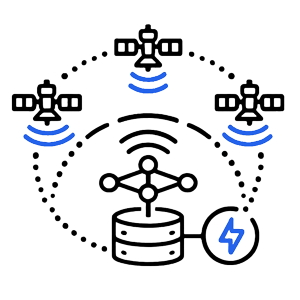
Dynamic pLEO Pooling
Field a provisioned fleet and activate service by mission need.
Allocation Algorithm
The network self-organizes and nominates the best available node for pLEO backhaul.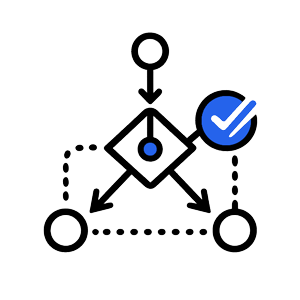
Centroid Rule
Optimizes gateway selection by identifying the network's topological center to reduce path loss and maximize signal quality.
Mission-Prioritized Backhaul
Routes traffic according to operational priority, link health, and available transport paths.Compatibility & Growth
Ready for Today. Prepared for Tomorrow.
HYDRA is designed as a drop-in modernization path across legacy and next-generation command-and-control environments, with open interfaces and modular transport options for future mission systems.

Seamless Compatibility
Supports operational readiness across diverse command-and-control environments without requiring extensive overhauls.